
 Contact us

The rails serve as the basis for the entire railroad track system and provide the platform for the trains. As we all know, ballast track and non-ballast track are two typical types of railroad tracks. There are many differences between ballast rail and non-ballast rail in terms of composition, construction, maintenance, cost, etc. As a Chinese manufacturer of guideway components,YONGYANGcompares ballast rail and ballastless rail.Ballast track
Ballast track is a type of traditional railroad track. Ballast track usually consists of rails, sleepers, railroad fasteners and ballast beds. In theory, ballast track is a product of railroad track development. 1865, the basic structure of modern track structure was completed. Ballast is generally laid under the rail sleepers to reduce the ground stress. A layer of gravel is laid between the ground and the railroad sleepers to form the ballast bed. Benefits
Ballast track requires low investment costs, is easy to lay, and has good drainage properties. Defects
Trains travel on ballasted track accompanied by a crashing sound and low speed. As a result, passengers may feel uncomfortable.
Ballasted tracks are prone to deformation and ballast beds require frequent and expensive maintenance.
The life expectancy of ballast track is short (about 15-20 years), and it may generate more pollution by releasing dust from the ballast. The noise level of ballast tracks is higher than that of non-ballast tracks.
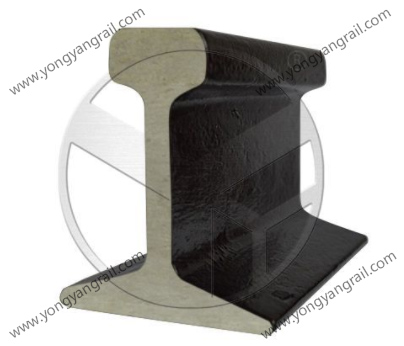
8kg light steel rail for mines china supply Ballastless track
Ballastless track, also known as ballastless track, is a railroad track with a substrate of concrete and asphalt mixes, etc. Generally ballastless track consists of steel rails, railroad fasteners and slabs. The rail sleeper of ballastless track is made of cast concrete. Instead of ballast bed, steel rails and railway sleepers are laid on the concrete track. There is no doubt that ballastless track is the most advanced track technology in the world. Slatted track is one of the most important types of ballastless track structures. Advantages
Ballastless track requires less maintenance, saves costs, reduces dust and beautifies the environment.
Ballastless track has excellent driving performance and stability, is durable and has a long service life (about 50-60 years). Ballastless track trains run fast and are comfortable to ride. Disadvantages
Ballastless track requires more investment costs than ballast track. Cannot be laid in areas with deep clay cuts, soft soil roads and seismic zones, etc.
The most serious disadvantage of ballastless track is the limited possibilities for improvement.
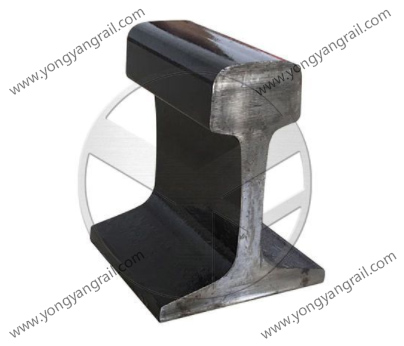
75Kg Heavy Steel Rail Applications
Ballast track and ballastless track have their own advantages as two common types of railroad track. In terms of applications, ballast track is used for ordinary high-speed and express railroads. Ballastless track is generally used for high-speed railroads. There are some exceptions, for example in China and France, where ballast track is used separately for high-speed railroads.