
 Contact us

Steel rails are an essential component of railway tracks, providing the necessary support for the movement of trains. These rails are manufactured from a variety of steel alloys and are designed to meet specific requirements of the railway track, such as durability, strength, and resistance to wear and tear. In this article, we will discuss the differenttypes of steel railsused in railway tracks.Carbon steel rails
Carbon steel rails are the most common type of steel rails used in railway tracks. They are made from a combination of iron and carbon, with the latter content typically ranging from 0.7% to 1.5%. Carbon steel rails are affordable and can be easily manufactured in large quantities. However, they have a low resistance to wear and tear, which means that they need to be replaced frequently. High-carbon steel rails
High-carbon steel rails have a higher carbon content than standard carbon steel rails, typically ranging from 0.8% to 1.1%. This makes them harder and more resistant to wear and tear, which means that they last longer than standard carbon steel rails. However, they are more expensive to manufacture, which makes them less popular for use on railway tracks.
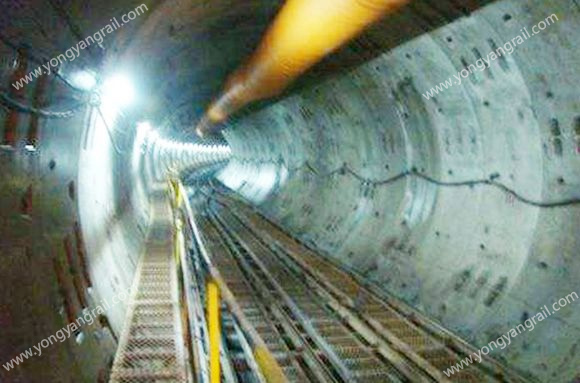
Tunnel Construction Alloy steel rails
Alloy steel rails are made from a combination of iron and other elements, such as manganese, silicon, and chromium. These elements give the steel improved mechanical properties, such as increased strength, toughness, and resistance to wear and tear. Alloy steel rails are typically more expensive than carbon steel rails but last longer and require less maintenance. Heat-treated steel rails
Heat-treatedsteel railsare made from carbon or alloy steel and undergo a heat treatment process to improve their mechanical properties. The heat treatment process involves heating the steel to a specific temperature and then cooling it down rapidly to create a more uniform microstructure. This results in a steel rail that is harder, stronger, and more resistant to wear and tear. Stainless steel rails
Stainless steel rails are made from a combination of iron, carbon, and chromium. The chromium gives the steel its characteristic resistance to corrosion, making it ideal for use in environments where there is a high risk of corrosion, such as coastal areas. Stainless steel rails are more expensive than carbon steel rails but require less maintenance and last longer.
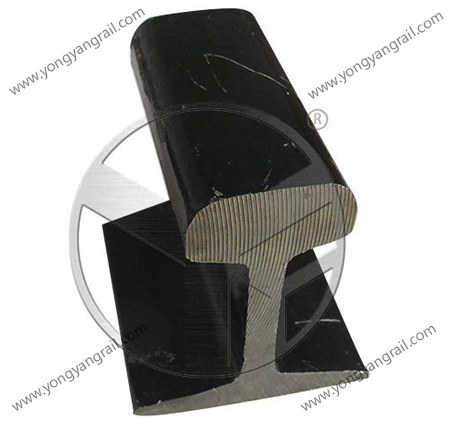
Light Steel Rail Head-hardened steel rails
Head-hardened steel rails are made from a special type of steel that undergoes a unique heat treatment process. This process involves heating the steel rail head to a high temperature and then rapidly cooling it down to create a hardened layer on the surface of the rail. The hardened layer makes the rail more resistant to wear and tear, which means that it lasts longer than other types of steel rails. Carbon-manganese steel rails
Carbon-manganese steel rails are made from a combination of iron, carbon, and manganese. The manganese gives the steel improved strength and toughness, making it ideal for use in heavy-duty railway tracks. Carbon-manganese steel rails are more expensive than carbon steel rails but last longer and require less maintenance. Low-alloy steel rails
Low-alloy steel rails are made from a combination of iron and small amounts of other elements, such as manganese, chromium, and nickel. The low alloy content gives the steel improved mechanical properties, such as increased strength, toughness, and resistance to wear and tear. Low-alloy steel rails are typically more expensive than carbon steel rails but last longer and require less maintenance.
In summary, the different types of steel rails used in railway tracks include carbon steel rails, high-carbon steel rails, alloy steel rails, heat-treated steel rails, stainless steel rails, head-hardened steel rails, carbon-manganese steel rails, and low-alloy steel rails.