
 Contact us


The Railroad Turnouts play a critical role in modern railway systems. These components, including switches, frogs, guard rails, stock rails, and closure rails, are vital for guiding trains across intersecting or diverging tracks. By enabling trains to change direction, turnouts significantly improve the operational flexibility and capacity of railway lines.
Railroad turnouts, also known as railway switches, are mechanical systems that allow trains to move from one track to another. The Types and Structure of Railroad Turnouts include essential parts such as switches, frogs, and guard rails, as well as accessories like switch rods, gauge plates, and cross ties. These components work together to create a seamless track-switching mechanism.
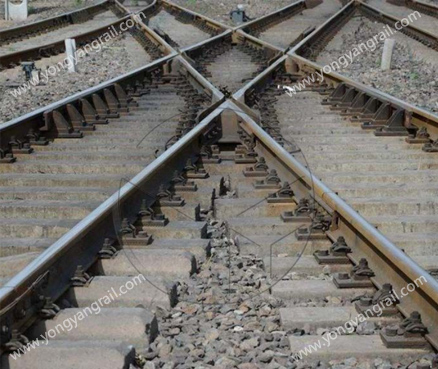
Railroad turnout
Key Components of Railroad Turnouts
1. Switches
Switches consist of switch rods, switch motors, and switch rails (also known as points). Powered by a switch motor, the switch rod repositions the switch rail, enabling trains to change tracks efficiently and safely.
2. Frogs
A frog, or railway crossing, allows one rail to cross another, facilitating track intersection. Frogs are made of steel and are available in various types, including:
- Rail-bound welded frog (RBW).
- Welded boltless manganese frog (WBM).
- Welded spring manganese frog (WSM).
3. Other Components
- Guard Rails: Prevent train wheels from derailing.
- Stock Rails: Fixed rails that provide stability.
- Closure Rails: Connect the frog to the rest of the track.
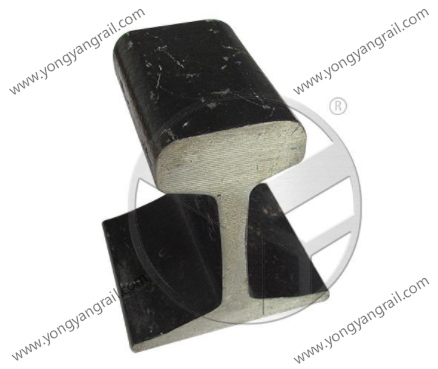
Types of Railroad Turnouts
1. Simple Turnouts
Simple turnouts feature a straight main track and a diverging lateral line. These are the most common type of turnout, making up 90% of all turnouts.
2. Equilateral Turnouts
Equilateral turnouts have two diverging tracks symmetrically arranged. They are often used at the head or tail of switching yards to increase the lead radius and shorten station lengths.
3. Three-Way Turnouts
These allow a single track to split into three directions. They are ideal for areas with terrain restrictions but have a shorter service life and higher maintenance requirements.
4. Slip Switches
Slip switches combine a simple turnout with another turnout to enable both track crossing and switching. They are compact and often used in high-density areas like passenger terminals.
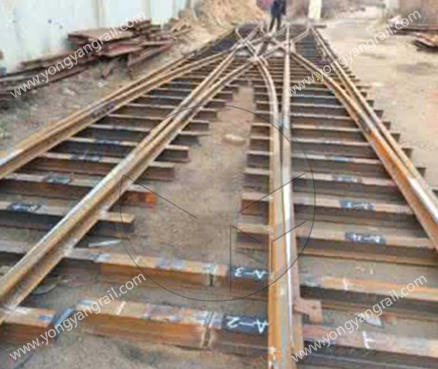
Applications of Railroad Turnouts
The Railroad Turnouts are widely used in various settings:
- Railway Stations and Marshalling Yards: Increase track capacity and enable trains to move in multiple directions.
- Switchyards: Allow for efficient organization of train movements.
- Restricted Spaces: Slip switches and three-way turnouts are ideal for areas with limited land availability.
Why Choose YongYang for Railroad Turnouts?
YongYang offers a wide range of products, including simple, equilateral, three-way, and slip turnouts, tailored to meet diverse operational needs. Our team provides technical support and customization services, including:
- Turnout design and fabrication.
- High-quality materials for durability and safety.
- Custom processing for specific requirements.
By understanding the Types and Structure of Railroad Turnouts, you can enhance the efficiency and safety of railway operations. Whether at a busy passenger terminal or a sprawling marshalling yard, turnouts play an essential role in keeping trains on track.
Choose YongYang for reliable and expertly engineered turnout solutions designed to meet your railway's specific needs. The Types and Structure of Railroad Turnouts form the backbone of modern rail networks, ensuring smooth and efficient train operations.