
 Contact us


Not allsteel railsare of exactly the same grade. This is especially true for older tracks. Now that better, more standardized manufacturing methods are available, any track that is only a few decades old could be 1084 or at least very similar.
Until then, though, it's probably anyone's guess. 200 years ago, they would have made tracks out of wood. It's been a steady upgrade from there.
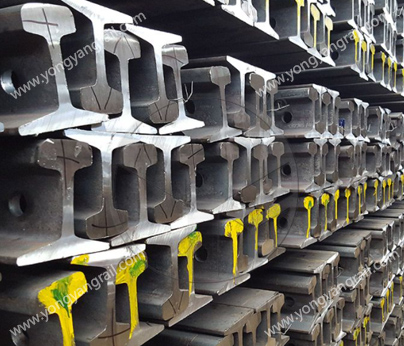
Steels with different carbon contents
Steel is used to make tracks for railway lines. This steel must be wear-resistant and friction-resistant. These properties of steel depend on the proportion of carbon and manganese it contains. A maximum of 0.82% carbon and a maximum of 1.7% manganese are required to produce a hard, wear-resistant steel. Low carbon steel
Contains less than about 0.25 weight percent carbon (low carbon steel)
relatively soft
Outstanding ductility and toughness
High machinability and weldability
Used for beams, channels, nuts, bolts, wire tin cans, etc.
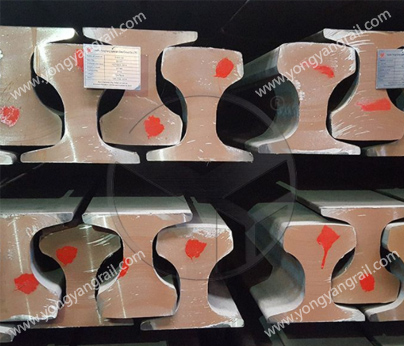
China standard QU120 Crane rail U71Mn Medium carbon steel
Contains 0.25-0.6 weight percentage of carbon
Stronger than low carbon steel, but lower ductility and toughness
Good wear resistance
Used in railroad wheels and rails, gears, crankshafts, etc. High carbon steel
Contains 0.6-1.4 wt. % carbon
The hardest, strongest and least ductile carbon steel
Can be alloyed with carbon and other metals to form a very hard and wear-resistant material
Used for cutting tools embossing dies, saws concrete drills, etc. It can also be used for railroad tracks.
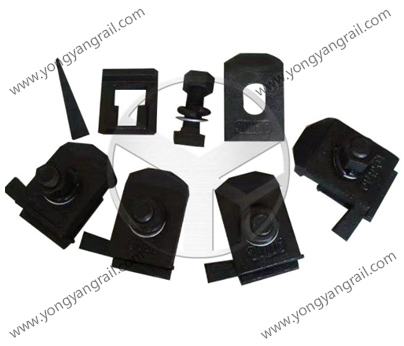
Rail Clip How to test it
Cut a small piece, preferably with zipper ties or some other type of cutting disk. Don't let the metal turn red.
Then heat the metal cherry red with a torch. If you are an expert in heat treating, you may be able to understand this with the naked eye. If you are like 99% of the rest of us, buy a neodymium magnet and wrap a stiff wire around it so you can hold it against the hot metal without getting your hand too close.
When the metal is at the right heat treatment temperature, it will no longer be magnetic. Don't let it get any hotter than that.
Try to keep the metal at that temperature for a few minutes by rotating the flame back and forth. Then submerge it in oil.
Once the metal has cooled, take a file and see if it bites in. If the file bites in, then the metal is softer than the file. If the file slips through it, then the metal is harder.
This will not tell you exactly if the track is 1084, but you will know if it is heat treatable. Heat Treatment of Steel
This is actually a very popular metal among toolmakers. It's great for forging and heat treating.
Making knives may take some effort to get a good shape, but once you do, it's a great carbon steel for cutting knives and will certainly hold an edge.
Many people also go to town and sharpen these into small anvils. The steel really resists hammering well, and these little anvils are great for fine, detailed work.
If you plan to do some heat treating, it would be good to use an infrared thermometer to confirm the temperature. Hardening metal can be a capricious process, especially if you get the hang of it.
For more info, pleasecontact YONGYANGand we will reply to you soon.